
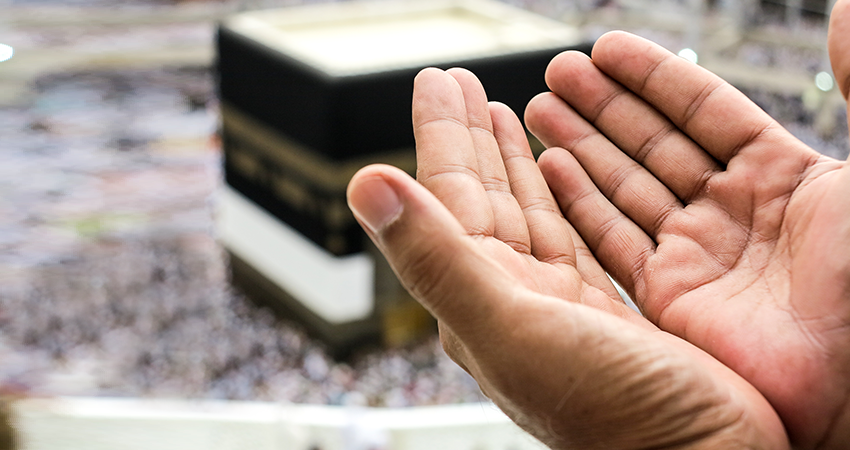
Prayers while Umrah
Performing Nawafil (voluntary prayers) during your Umrah journey is a beautiful way to maximize your rewards, as the Prophet Muhammad ﷺ noted that a single prayer in Masjid al-Haram is worth 100,000 prayers elsewhere.
While the core steps of Umrah require specific prayers, there are also highly recommended voluntary prayers you can offer throughout your time in Makkah.
1. Nawafil Directly Tied to the Umrah Rituals
These two prayers are directly woven into the steps of your Umrah. While some schools of Islamic jurisprudence consider them sunnah or wajib (necessary), they are performed as two-rak’ah units:
- Two Rak’ah of Ihram: Before making your formal intention (Niyyah) for Umrah and entering the state of Ihram, it is Sunnah to perform two rak’ah of voluntary prayer (provided it is not a forbidden time for prayer). It is recommended to recite Surah al-Kafirun in the first rak’ah and Surah al-Ikhlas in the second.
- Two Rak’ah of Tawaf: Immediately after finishing your seven circuits of the Kaaba, you must offer two rak’ah. The primary location to pray this is behind Maqam Ibrahim (the Station of Abraham). If the Mataf (the crowd surrounding the Kaaba) is too congested, you can offer these two rak’ah anywhere within Masjid al-Haram. Again, recite Surah al-Kafirun and Surah al-Ikhlas.
2. General Nawafil to Perform in Masjid al-Haram
Aside from the specific Umrah rituals, you should take advantage of your time in the mosque to offer these highly rewarding voluntary prayers:
- Tahiyyat al-Masjid (Greeting the Mosque): Whenever you enter Masjid al-Haram strictly for a purpose other than Tawaf (like attending a lecture or sitting to read Quran), it is Sunnah to pray two rak’ah before sitting down.Note: If you enter the mosque to immediately start your Umrah or a voluntary Tawaf, the “greeting” of the Kaaba is the Tawaf itself; you do not need to pray Tahiyyat al-Masjid first.
- Tahajjud & Witr (Night Prayers): Performing Tahajjud in the final third of the night inside Masjid al-Haram is an incredibly profound experience. You can pray this in units of two, ending your night with the Witr prayer if you haven’t prayed it after Isha.
- Ishraq / Duha Prayer: Offered after the sun has fully risen (roughly 15–20 minutes after sunrise) up until shortly before Dhuhr. The Prophet ﷺ mentioned that praying Fajr in congregation, sitting to remember Allah until sunrise, and then praying two rak’ah yields the reward of a complete Hajj and Umrah.
- General Voluntary Prayers: You can pray general, open-ended Nawafil in units of two rak’ah at any time of the day or night, as long as it does not fall during the prohibited times (exactly during sunrise, when the sun is at its absolute zenith, and after the Asr prayer until sunset).